How to Choose the Right Kitchen Cabinets for Humid Louisiana Climates
Key Takeaway: In high-humidity environments like Louisiana, cabinet material, construction method, and finish type are durability decisions as much as design choices. Selecting the wrong cabinet setup can lead to warping, mold, swollen edges, and joint failure within a few years, especially in Gulf-influenced conditions where moisture remains consistently high.
Louisiana's climate places unusual stress on kitchen cabinetry. Relative humidity frequently stays above 70 percent across much of the state, and in Gulf-adjacent communities, moisture levels remain elevated even indoors. Kitchens amplify that challenge through steam from cooking, dishwasher heat cycles, and damp sink zones. Choosing the right cabinet material is less about style and more about how well it resists years of expansion, contraction, and moisture exposure.
This guide explains which cabinet materials, construction methods, finishes, and installation practices hold up best in humid Louisiana kitchens.
Why Humidity Damages Cabinets Over Time
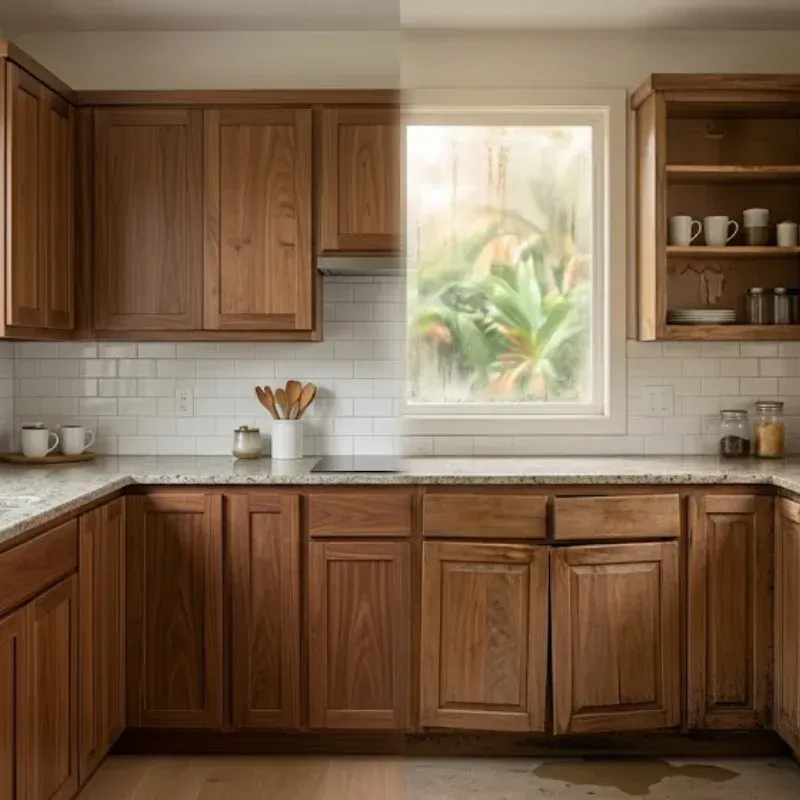
Wood and wood-based materials constantly respond to moisture in the surrounding air. In humid conditions, they absorb moisture and expand, then contract when the conditions dry out. Over time, this repeated cycle leads to warping, cracking, edge swelling, joint separation, and, in some cases, mold growth on interior surfaces. This is one reason why kitchen remodeling in Lafayette requires material decisions that go beyond appearance — what looks identical on a showroom floor can perform very differently once it is exposed to a Louisiana home's environment year-round.
The kitchen environment accelerates this wear. Steam from cooking, dishwasher exhaust, poor under-sink ventilation, and exterior wall moisture all increase stress on cabinet boxes and doors. In Louisiana, where these conditions persist for much of the year, weaker materials can begin to show damage within only a few years.
Cabinet Materials: What Performs Best in Louisiana Humidity
Solid Wood Cabinets
Solid wood remains durable and highly repairable, but it is also the most reactive to humidity. Tighter-grained species such as maple, cherry, and birch tend to remain more dimensionally stable than open-grained woods like oak. For Louisiana kitchens, all cabinet surfaces should be sealed, including backs, undersides, and interior panels. Without full sealing, even premium hardwood cabinets can gradually distort over time.
Plywood Cabinets (Best Overall)
Plywood is typically the most reliable cabinet box material for humid climates because its cross-laminated layers resist directional swelling. This makes it significantly less likely to warp than solid wood or fiber-based boards. For the best long-term performance, hardwood plywood boxes with furniture-grade veneer faces remain the strongest choice, especially when exterior-grade or marine-grade plywood is used near sinks and other moisture-heavy areas.
MDF and Particleboard
MDF provides a smooth, stable surface for painted doors and decorative profiles, but it remains vulnerable to moisture, especially at cut edges, hinge bores, and seams. In humid Louisiana kitchens, MDF performs best when limited to doors rather than full cabinet boxes. Particleboard performs far worse in persistent humidity. Once moisture enters the board, swelling is usually permanent, which quickly compromises structural integrity. This makes it particularly risky near sinks, dishwashers, toe-kick zones, and exterior walls.
PVC and Thermoplastic Options
PVC-based and thermoplastic cabinets are among the most moisture-resistant options available. They work especially well in heavy-use kitchens, rental properties, or homes where the lowest-maintenance profile is the top priority.
Construction Quality Matters Just as Much
Humidity does not only attack materials. It also exposes weak construction. Dovetail and dowel joinery hold up far better than stapled drawer boxes because moisture places ongoing stress on fasteners and joints. Fully enclosed cabinet backs add rigidity and reduce wall-side moisture transfer, which is especially important on exterior walls where condensation can build.
Face-frame cabinets naturally add more structural support, while frameless designs depend much more heavily on high-quality plywood or moisture-resistant box materials. When evaluating contractor recommendations on cabinet construction,
Home Remodeling Pros Lafayette emphasizes that construction quality and material selection work together — neither compensates fully for weaknesses in the other, particularly in a climate as demanding as Louisiana's.
Finish Type and Moisture Protection
The finish is the cabinet's primary defense against humidity. Catalyzed conversion varnish and polyurethane finishes remain the most durable options because they create a harder, less permeable barrier than standard lacquer finishes. Thermofoil also resists moisture well while intact, but it becomes vulnerable near ovens, dishwashers, and coffee stations where heat can loosen seams. Once lifting begins, moisture can quickly reach the MDF beneath.

Finish selection also interacts with your countertop choice more than most homeowners realize. The junction between cabinet face frames and countertop edges is a common moisture entry point, which is why it helps to evaluate
countertop materials that also resist moisture
at the same stage as cabinet planning rather than treating them as separate decisions.
Installation Details That Improve Longevity
Even the best cabinet materials perform poorly if installation ignores moisture management. A range hood that vents outside instead of recirculating air significantly reduces long-term humidity buildup. Under-sink cabinets should be protected with sealed interiors, airflow gaps, or moisture trays, especially in homes where plumbing access points are frequently used.
Toe kicks also deserve more attention than many homeowners realize. Proper sealing at floor level prevents water from wicking upward into base cabinets, while slight clearance from exterior walls improves airflow and reduces trapped condensation.
Installation quality questions also often surface during the planning stage, particularly for homeowners trying to decide whether to remodel or replace your kitchen entirely. Cabinet condition and moisture damage extent are among the most important factors in making that call correctly.
What Actually Lasts 10 Years in Louisiana Kitchens
For most Louisiana remodels, the most durable long-term setup combines plywood cabinet boxes, fully sealed solid wood or MDF doors, a catalyzed finish, corrosion-resistant hinges, and strong kitchen ventilation.
Ventilation is consistently underweighted in cabinet planning conversations, even though it has a direct impact on how long materials last. Following proper kitchen ventilation standards helps reduce the baseline humidity load that cabinets must absorb over time, extending the effective lifespan of even mid-range materials when they are installed correctly.
The difference between cabinets that still look excellent in a decade and cabinets that begin failing in a few years almost always comes down to whether the material, finish, and installation decisions respected Louisiana's climate from the beginning.

Written By:
Domenique Bomediano
Home Improvement Research Specialist
Dom specializes in creating research-based content focused on home improvement, construction, concrete services, and exterior property upgrades. His work transforms complex industry topics, contractor processes, and building practices into clear, practical information that helps property owners make informed renovation and maintenance decisions.