How to Choose the Best Kitchen Flooring for Louisiana’s Climate
BOTTOM LINE:
Louisiana’s heat, humidity, and occasional flooding make kitchen flooring a more consequential decision than it is in most other parts of the country. Materials that perform beautifully in drier climates can warp, swell, or deteriorate quickly in Lafayette’s conditions. The right choice depends on understanding which materials are genuinely built for this environment — and which ones only look that way on a showroom floor.
Choosing kitchen flooring in Lafayette is not the same decision it would be in Denver or Dallas. The Gulf South climate puts flooring materials under stress that most manufacturer specifications do not fully account for. Year-round humidity, hot summers, heavy rain, and the ongoing risk of water intrusion all change how kitchen floors perform in Lafayette. What holds up in a test environment does not always hold up in a Lafayette kitchen that runs humid nine months out of the year.
This guide covers what Louisiana homeowners actually need to know before choosing kitchen flooring: which materials hold up best in this climate, which ones are often regretted, and what to evaluate beyond the surface material itself.

Why Louisiana’s Climate Changes the Flooring Equation
Lafayette sits in a subtropical climate zone. Average humidity regularly runs above 70 percent, summer temperatures push into the high 90s, and the area receives significant annual rainfall. For kitchens specifically — where cooking, dishwashing, and foot traffic add moisture to an already humid environment — the floor is one of the most exposed surfaces in the home.
The most common flooring mistakes we see in this region come from homeowners who selected materials based on appearance without accounting for how Louisiana’s conditions would affect them over time.When planning a
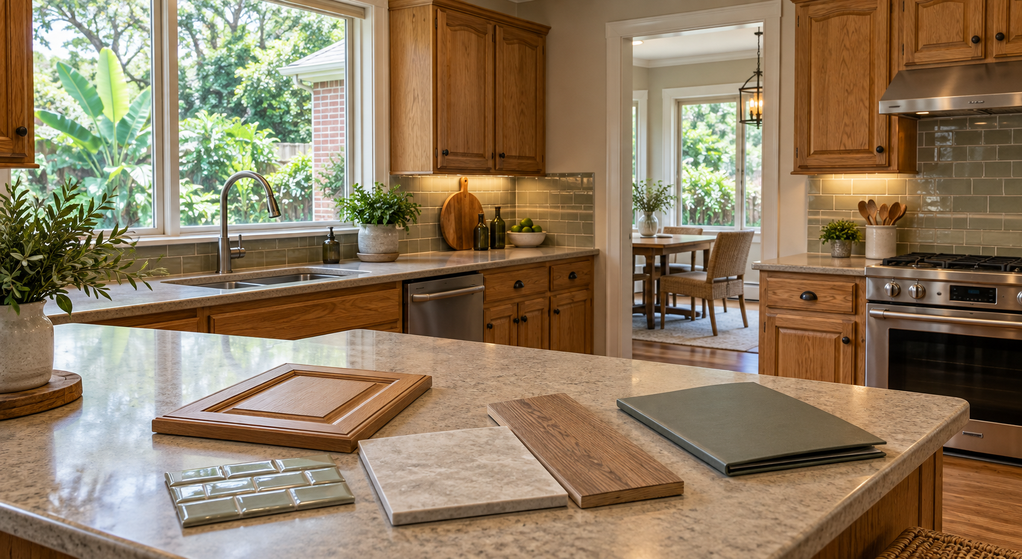
kitchen remodel in Lafayette, flooring is one of the decisions where local input matters early. Getting guidance before committing to a material that may underperform in this climate can save significant time and money.
The key variables to evaluate for any flooring material in this climate are moisture resistance, dimensional stability under humidity changes, slip resistance when wet, and how the material responds to temperature fluctuations between air-conditioned interiors and Louisiana summers. Not all materials score well on all four.
Flooring Options: What Works and What Doesn’t
Porcelain and ceramic tile
Tile is the most climate-appropriate choice for Louisiana kitchens, and it has been for generations. It does not absorb moisture, does not swell or contract with humidity changes, and can be kept cool underfoot even in summer — a quality that Lafayette homeowners who cook frequently come to appreciate quickly. Porcelain tile in particular is denser and less porous than ceramic, making it the stronger performer in high-moisture environments.
The primary considerations with tile are comfort and grout maintenance. Standing on tile for extended cooking sessions is harder on joints than softer surfaces, though anti-fatigue mats address this practically. Grout lines require consistent sealing — unsealed grout in a humid Lafayette kitchen will discolor and deteriorate faster than most homeowners expect. Epoxy grout, while more expensive to install, eliminates much of the long-term maintenance concern.
Luxury vinyl plank and luxury vinyl tile
LVP has become one of the most practical flooring choices for Louisiana kitchens in recent years, and the reasons are straightforward. Quality luxury vinyl plank is waterproof at the core level, dimensionally stable under humidity fluctuation, comfortable underfoot, and available in a wide range of styles that convincingly replicate wood, stone, and tile aesthetics. For homeowners who want the look of hardwood without the climate risk, LVP is the most defensible choice in this region.
The distinction that matters most here is between water-resistant and waterproof LVP. Water-resistant products can handle spills and surface moisture but will eventually fail under prolonged exposure or water intrusion at the seams. Fully waterproof, rigid-core LVP performs substantially better in Louisiana’s conditions and is usually worth the added cost. That is especially true in kitchens where the subfloor may occasionally pick up moisture from below.
Hardwood
Solid hardwood is the most commonly regretted kitchen flooring choice in Lafayette, and the reason is simple: solid wood expands and contracts with humidity, and Louisiana’s humidity swings — even indoors with air conditioning — are significant enough to cause cupping, gapping, and warping over time. Homeowners who install solid hardwood in Lafayette kitchens often notice visible movement within the first year or two, especially in high-traffic areas near the sink and dishwasher.
Engineered hardwood performs better than solid because its cross-ply construction resists dimensional movement, but it is still not immune to the challenges of this climate. In a well-conditioned home where indoor humidity is actively managed, engineered hardwood can be a reasonable choice. In homes that run without air conditioning for extended periods, or where the kitchen sees significant water activity, the risk of performance issues is meaningfully higher.

Natural stone
Marble, travertine, and limestone are beautiful and genuinely durable, but they require consistent maintenance in a humid climate that many homeowners underestimate. Natural stone is porous and must be sealed regularly — in Lafayette’s humidity, an unsealed or undersealed stone floor can develop mold growth in grout lines and surface etching from cooking moisture faster than in drier climates. Granite and slate perform better than softer stones because of their density, but the maintenance commitment remains.
For homeowners committed to the aesthetic of natural stone, the investment in professional installation with proper substrate preparation and ongoing sealing is non-negotiable. Stone installed over an improperly prepared subfloor in this climate will show problems — cracking, lippage, and moisture infiltration at seams — more quickly than in more forgiving environments.
What to Consider Beyond the Material
Subfloor condition
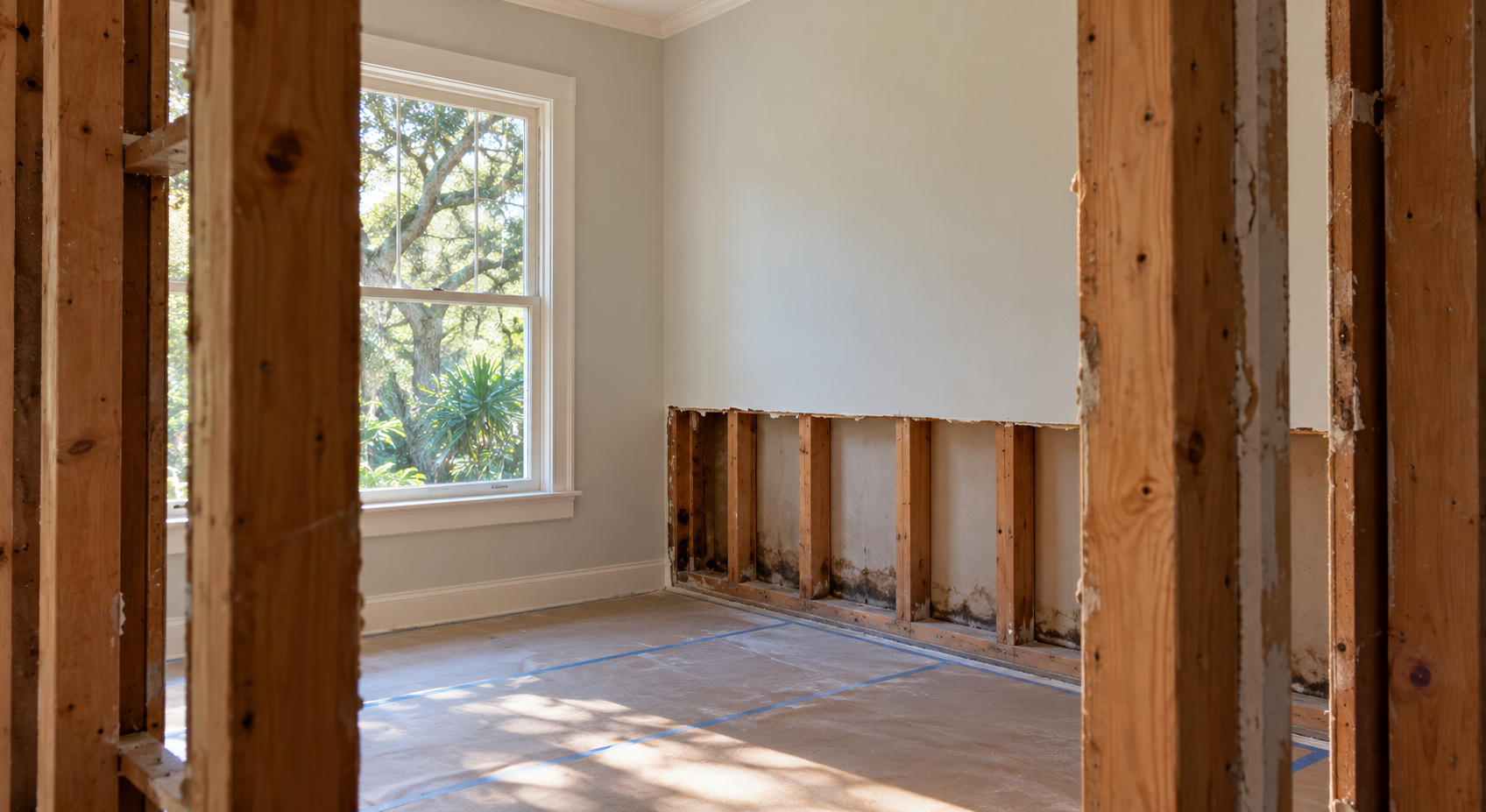
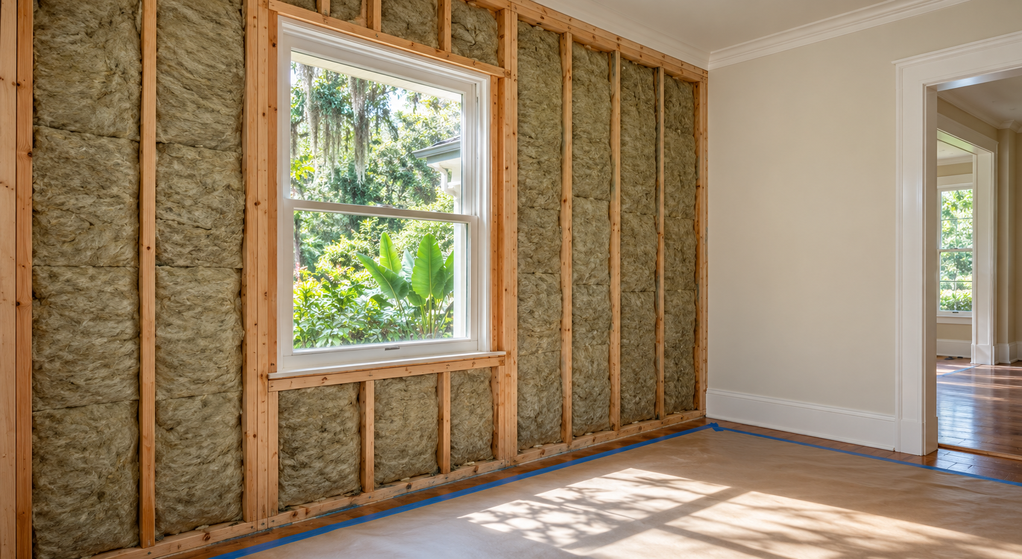
The subfloor beneath your kitchen floor matters as much as the material on top of it. In Louisiana homes — particularly older ones — subfloor moisture, levelness, and structural integrity are common concerns that affect how any flooring material will perform over time.At Home Remodeling Pros Lafayette, every kitchen flooring project starts with a thorough subfloor assessment. Even premium flooring will underperform if it is installed over a compromised substrate.
Moisture barriers are particularly important in Lafayette’s climate. In slab-on-grade construction — common throughout southern Louisiana — moisture vapor transmission from the concrete slab can affect flooring performance even when the slab appears dry. A vapor barrier or moisture-resistant underlayment is a standard protective measure, not an optional upgrade, in this region.

Grout and seam placement
For tile installations, grout line width and seam placement affect both aesthetics and long-term performance. Wider grout lines are more visible but easier to maintain. Rectified tile with minimal grout lines looks cleaner but requires a more precisely level substrate to avoid lippage. In wet areas near the sink and dishwasher, closer attention to seam sealing is warranted regardless of material choice.
Slip resistance
Louisiana kitchens see a lot of foot traffic, and the combination of cooking spills and high ambient humidity means wet floors are a practical reality. Slip resistance — measured by a material’s coefficient of friction — is worth factoring into the selection process, particularly in households with older adults or young children. Matte-finish tile and textured LVP generally perform better on this measure than polished or high-gloss surfaces.
Common Mistakes Lafayette Homeowners Make
Choosing a material based on a showroom or online photo without asking how it performs in high-humidity environments is the most frequent mistake. Showrooms are air-conditioned, dry, and controlled. They do not reflect the real conditions that stress a Lafayette kitchen floor. Asking specifically about performance in the Gulf South climate and working with contractors who have installed the material locally gives a much more accurate picture than spec sheets alone.
Underinvesting in installation is the second most common mistake. The best flooring material installed incorrectly — over an unprepared subfloor, with improper moisture barriers, or with inadequate sealing — will underperform a mid-range material installed correctly. Our full range of flooring and remodeling services covers what proper installation involves for each material type and why the process matters as much as the product.
Overlooking maintenance requirements is the third. Every flooring material in a Louisiana kitchen requires some level of ongoing care — grout sealing for tile, periodic recoating for some LVP products, and regular resealing for natural stone. Choosing a material without understanding its maintenance commitment leads to floors that look good at installation and deteriorate faster than expected.
Making the Right Choice for Your Kitchen
For most Lafayette homeowners, the decision comes down to a straightforward hierarchy: porcelain tile for maximum climate performance and longevity, waterproof rigid-core LVP for the balance of performance and comfort, and engineered hardwood for homeowners committed to a wood aesthetic who are willing to manage indoor humidity carefully. Natural stone is a viable choice for homeowners who understand the maintenance it requires in this climate.
What matters most is matching the material to the reality of your kitchen — how it’s used, how the home is conditioned, and what level of maintenance you are genuinely willing to commit to. A beautiful floor can cost more in the long run if it requires more upkeep than your lifestyle can realistically support. A slightly less dramatic option that holds up with minimal intervention is often the smarter choice.

For homeowners working through broader kitchen or home remodeling decisions, our collection of
home remodeling tips for Lafayette homeowners covers the material, design, and planning questions that come up most often in this region. Flooring is one piece of the puzzle — and it connects to decisions about layout, cabinets, and overall kitchen design in ways worth understanding before the project begins.

Written By:
Domenique Bomediano
Home Improvement Research Specialist
Dom specializes in creating research-based content focused on home improvement, construction, concrete services, and exterior property upgrades. His work transforms complex industry topics, contractor processes, and building practices into clear, practical information that helps property owners make informed renovation and maintenance decisions.