Kitchen Storage Ideas in Lafayette That Make Cooking Easier
Storage Planning Guide:
Kitchen storage in Lafayette works best when cabinets, drawers, pantry space, and appliance storage are planned around real cooking routines instead of appearance alone. Zone-based storage, deep drawers, smarter corner solutions, visible pantry organization, and easy-reach placement can make cooking faster, cleaner, and less frustrating.
A beautiful kitchen can still feel like a daily obstacle course when every meal begins with moving appliances, digging through deep cabinets, or searching for the right pan. In many Lafayette homes, the real problem is not a lack of space but storage that does not match how the kitchen is actually used. Homeowners exploring
kitchen remodeling services in Lafayette should think beyond appearance and consider how the room supports preparation, cooking, cleanup, and movement. When storage is planned around real routines, the kitchen becomes easier to navigate, less frustrating to maintain, and far more enjoyable to use.
Start With Cooking Zones
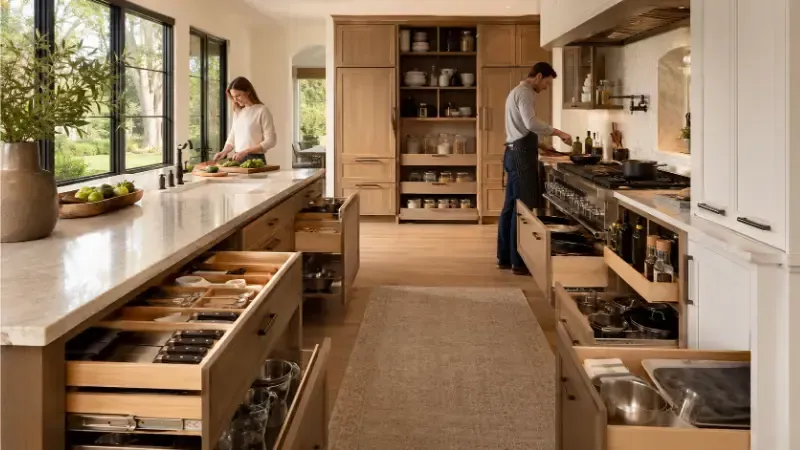
At Home Remodeling Pros Lafayette, LA, our kitchen remodeling experts often divide the room into work zones before selecting cabinets or organizers. In our work across Lafayette and Acadiana, we have seen that homeowners save time when frequently used items stay close to the task they support.
The prep zone should hold knives, cutting boards, mixing bowls, peelers, and measuring tools. The cooking zone should keep pots, pans, utensils, oils, and everyday seasonings near the range. Baking supplies belong near the largest available counter area, while cleaning products should stay close to the sink.
This matters because repeated extra movement creates daily frustration. A zone-based layout also helps multiple people use the kitchen without constantly crossing paths.
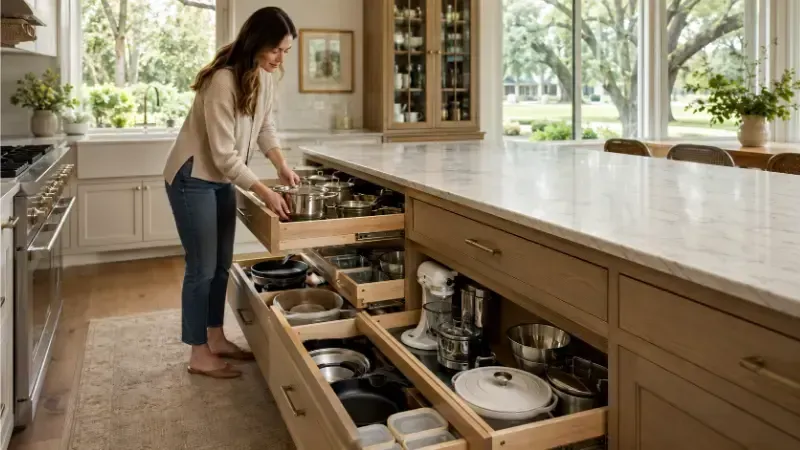
Use Deep Drawers for Cookware
Deep drawers are among the most useful upgrades in a working kitchen. They allow homeowners to see cookware from above instead of crouching and pulling items from the back of a lower cabinet.
Pots, pans, mixing bowls, small appliances, and food containers all work well in deep drawers. Heavy items should stay low because lifting them from upper cabinets creates unnecessary strain. Full-extension slides expose the entire drawer, including the rear section that often becomes wasted space.
The tradeoff is cost. Drawer systems usually cost more than standard shelves, and weak hardware can sag under heavy cookware. Durable slides are worth prioritizing because this storage will be used every day.
Fix Wasted Corner Space
Corner cabinets are often the least efficient areas in a kitchen. Traditional blind corners can hide items so deeply that homeowners forget what they own. Lazy Susans, pull-out trays, and corner drawers can make these spaces more useful. These are just a few small kitchen space-saving ideas that can improve storage and functionality.
Rotating shelves work well for lightweight pantry goods and small appliances. Pull-out systems provide better access but cost more and require precise installation. Corner drawers offer excellent visibility, although they may hold less than a basic cabinet box.
A common mistake is choosing hardware because it looks impressive in a showroom. The mechanism must fit the items the household actually stores. A complicated organizer has little value when it cannot support the weight or dimensions of everyday cookware.
Keep Everyday Items Within Easy Reach
The most convenient storage area is usually between waist and eye level. Everyday dishes, glasses, food containers, seasonings, and preparation tools should occupy this range whenever possible. These storage principles are a key part of functional kitchen layouts that improve efficiency and everyday comfort.
Rarely used appliances and seasonal pieces can go higher. Heavy cookware, bulk goods, and cleaning supplies belong lower. This placement improves safety and reduces unnecessary bending, reaching, and lifting.
Some older Lafayette homes have unusually high or shallow upper cabinets. Adjustable shelves, pull-down systems, and interior organizers can improve access without requiring homeowners to replace every cabinet.
Reduce Countertop Clutter
Countertops should provide room for chopping, mixing, and plating. Appliances used every day may deserve a dedicated station, but occasional-use equipment should have a defined storage location.
An appliance garage can hide smaller devices while keeping them accessible. Deep drawers or pull-out shelves can hold heavier equipment. Before adding these features, consider ventilation, outlet placement, cord clearance, and the space needed to operate each appliance.
One frequent mistake is creating storage that fits an appliance but leaves no room to use it. A stand mixer, for example, needs clearance for its bowl and attachments. Good storage should support the complete cooking task rather than simply providing a place to hide the appliance.
Use Vertical Space Carefully
Tall cabinets, shelf risers, tray dividers, and door-mounted racks can increase storage without expanding the kitchen. Vertical dividers are especially useful for baking sheets, cutting boards, serving trays, and pan lids because they prevent unstable stacking.
Floor-to-ceiling pantry cabinets can work well in smaller kitchens, but they should not block natural light or make the room feel crowded. Open shelves reduce visual bulk, although they collect dust and cooking residue more quickly.
Acadiana’s humid climate also makes material selection important. Cabinets near sinks, dishwashers, and exterior walls need durable finishes and careful installation around moisture-prone areas. Easy-to-clean surfaces are especially valuable near food preparation and cooking zones.
Plan the Pantry Around Visibility
A useful pantry lets homeowners see what they have before buying more. Pull-out shelves, shallow shelving, clear containers, and simple categories can reduce duplicate purchases and expired food.
Deep shelves may appear spacious but often perform poorly because items disappear behind one another. Bulk goods can stay low, while frequently used ingredients should remain near eye level.
Avoid systems that take too much effort to maintain. Too many containers, labels, and narrow categories can become another household chore. The best pantry is one the household can realistically keep organized
Choose Storage Based on Real Habits
The smartest storage plan begins with observation. Note what you reach for most, where clutter forms, which cabinet doors conflict, and which cooking tasks feel awkward. These details provide more useful guidance than a generic cabinet catalog.
Based on more than 20 years of remodeling experience, one lesson remains consistent: storage performs best when it follows real behavior. A beautiful kitchen that ignores daily habits will continue to create frustration.
Before finalizing a layout, list the kitchen’s most common activities, assign each one a zone, and place the necessary tools within easy reach. That gives Lafayette homeowners a clear next step and greater confidence that their storage choices will make cooking easier for years to come.

Written By:
Kurt Manalastas
Home & Property Research Journalist
Kurt is a Home & Property Research Journalist who creates educational content on home services, property improvements, and residential decision-making. He turns contractor insights, industry standards, and research findings into clear, practical guidance that helps homeowners better understand their options and make informed property decisions.